Cosmic starry background artwork for the Kardecist Spiritism, Umbanda, and Candomblé portal

KARDECIST SPIRITISM, UMBANDA, AND CANDOMBLÉ

Three paths. Three histories.

What do these traditions share—and what truly sets them apart?

An exploration of their histories, foundational beliefs, and internal diversity, drawing on sources from within each tradition, historical records, and academic research.

LISTEN TO THE PODCAST
Start Reading

The question guiding this exploration

Why do so many people confuse these three traditions?

Surface similarities do not mean shared historical origins or identical doctrines. Before comparing them, it helps to trace where each path came from.

  1. Shared vocabulary

    Words such as "spirit" and "mediumship" appear across more than one tradition, yet with distinct foundations, meanings, and practices. Within Candomblé communities, for instance, Orixás, Voduns, and Inquices are not the spirits of deceased human beings.

  2. Coexistence in the same territory

    All three are practiced in Brazil—often in the very same neighborhood—which feeds the impression that they form a single unified system. Even the religious house linked to Umbanda's traditional founding narrative carries the word "spiritist" (espírita) in its name: Tenda Espírita Nossa Senhora da Piedade.

  3. Lack of historical context

    Without knowing the origin of each path, it is easy to put them all in the same box. It is like looking at three books on the same shelf, noticing they all address questions about human existence, and assuming they are the same book.

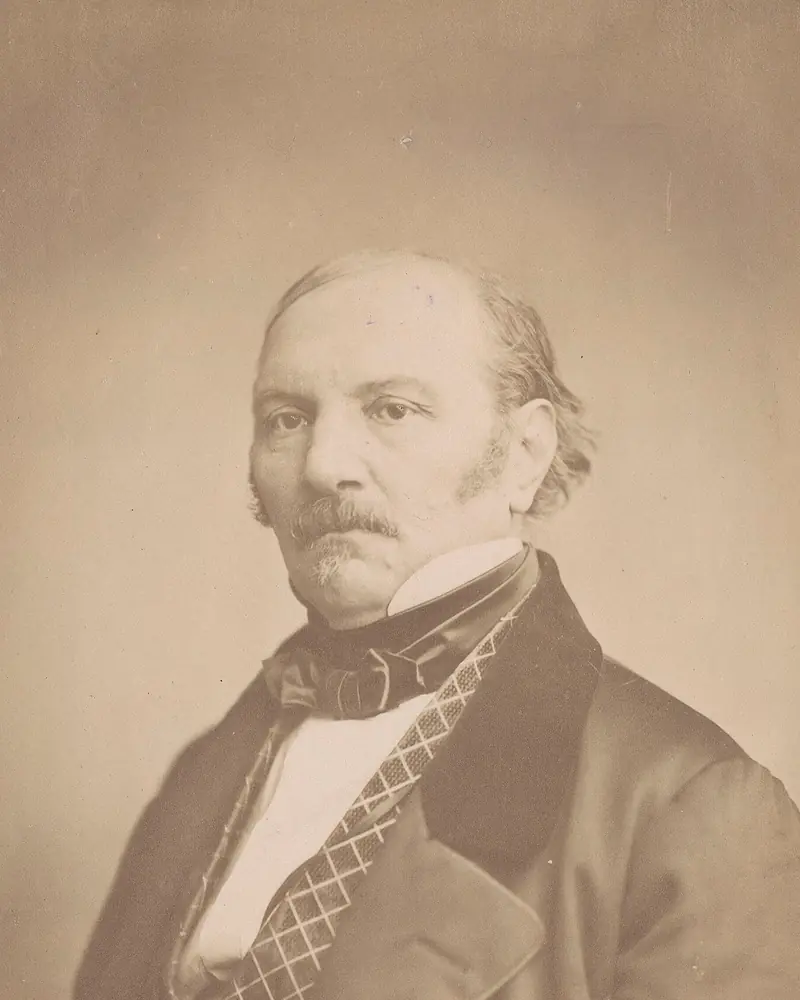
Half-length 19th-century photographic portrait of Allan Kardec wearing a dark period coat, looking directly toward the camera.
Allan Kardec (Hippolyte Léon Denizard Rivail, 1804–1869). 19th-century photographic portrait. Bibliothèque nationale de France (Gallica) · public domain
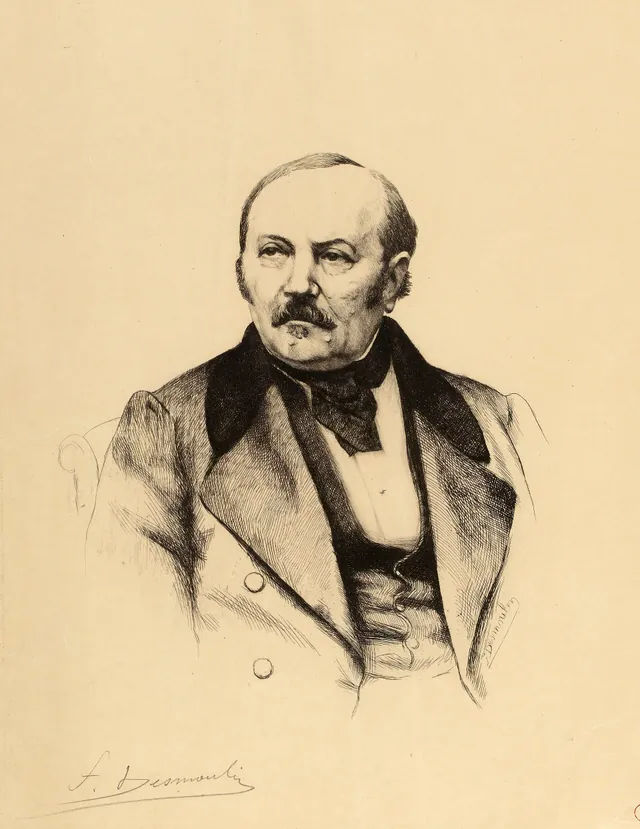
Fine-line etching portrait of Allan Kardec in profile-angled view with the engraver's signature below.
Etching by Fernand Desmoulin. Musée Carnavalet · CC0

Chapter I · Kardecist Spiritism · Paris, 1857

The Spiritist Codification

How the investigation of 19th-century spiritualist phenomena in Europe led to Allan Kardec's written doctrinal system.

In 19th-century France, a range of spiritualist phenomena sparked intense curiosity and debate across European salons and intellectual circles. Among them was table-turning (tables tournantes), drawing participants eager to understand physical movements and responses attributed to an unseen intelligence.

In that environment, French educator and textbook author Hippolyte Léon Denizard Rivail (1804–1869)—a follower of Pestalozzi's educational ideas—began systematically observing communications attributed to spirits.

Adopting the pen name Allan Kardec, he compiled and organized these questions and answers into a philosophical and religious doctrine and, on April 18, 1857, published The Spirits' Book in Paris, marking the beginning of the Spiritist Codification.

What does Spiritist doctrine propose?

According to its primary texts and the synthesis presented by the Brazilian Spiritist Federation (FEB), Kardecist Spiritism views the spirit as immortal, considers reincarnation central to its journey, and places primary emphasis on human intellectual and moral development.

Mediumship plays an important role in the doctrine. Spiritists understand it as a faculty associated with communication between spirits and living people.

Documentary Chronology

  1. 1854–55

    Rivail began systematically observing table-turning sessions and mediumistic writing in Paris.

  2. 1857

    On April 18, The Spirits' Book was published in Paris, marking the beginning of Kardecist Spiritism.

  3. 1861–68

    Allan Kardec completed the Codification with The Mediums' Book (1861), The Gospel According to Spiritism (1864), Heaven and Hell (1865), and Genesis (1868).

  4. 1884

    The Brazilian Spiritist Federation (FEB) was founded in Rio de Janeiro, becoming a leading institution in preserving and publishing Spiritist works in Brazil.

Food for thought · the piano metaphor

Picture someone learning to play the piano: they do not master the instrument in a single lesson, but practice, recognize mistakes, and build skill over successive sessions. From the Spiritist perspective, the spirit's progress can be understood as a process of continuous learning across multiple lifetimes. The analogy illuminates the internal logic of the doctrine, though it is not an empirical proof of reincarnation.

“If learning is continuous, what does moral growth mean in light of free will and personal responsibility for our choices?”

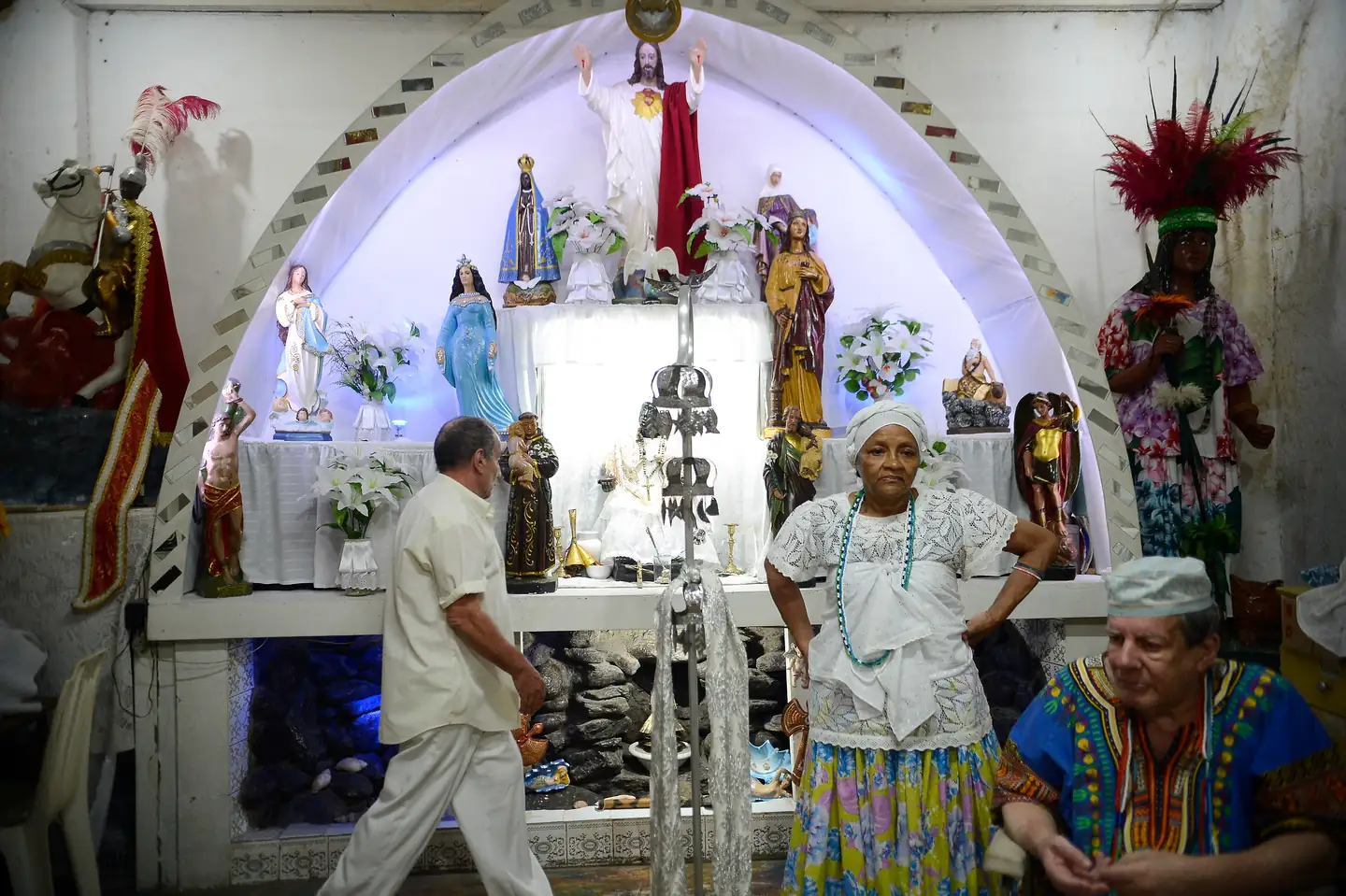
Interior of Tenda Espírita Vovó Maria Conga de Aruanda in Estácio, Rio de Janeiro: an altar with sacred images, congregants dressed in white, and a medium wearing a white turban.

Chapter II · Umbanda · Brazil, multiple origins and traditions

The Formation of Umbanda

Between the 1908 founding narrative and broader historical processes: understanding Umbanda requires listening to its diverse communities.

Understanding Umbanda requires looking at Brazil's religious, social, and cultural history. Unlike Kardecist Spiritism, which emerged in France and developed around a written body of doctrine, Umbanda developed through multiple historical processes, drawing on African, Indigenous, Catholic, and other spiritual traditions in ways that vary across regions and religious communities.

For that reason, we should never treat Umbanda as a subdivision or offshoot of Kardecist Spiritism, nor assume that any single federation speaks for all Brazilian terreiros (religious communities and their sacred spaces).

Tenda Espírita Vovó Maria Conga de Aruanda, Estácio (RJ) · Photo: Tânia Rêgo/Agência Brasil · CC BY 2.0

Two Perspectives on Umbanda's Origins

Founding memory

Zélio de Moraes and the Caboclo das Sete Encruzilhadas

A founding account recognized by many Umbanda institutions, such as the National Council of Umbanda, places the religion's origin on November 15, 1908, in Neves, São Gonçalo (Rio de Janeiro). On that date, young Zélio Fernandino de Moraes reportedly manifested the Caboclo das Sete Encruzilhadas through mediumistic incorporation and, soon after, the Preto-Velho Pai Antônio, giving rise to the Tenda Espírita Nossa Senhora da Piedade.

Why it matters: it records a foundational identity, institutional touchstone, and symbolic milestone for many Umbanda lineages.

Historical and academic research

Earlier cultural processes and diverse centers

Historical research shows that Afro-Brazilian and Indigenous religious practices—such as 19th- and early 20th-century cabulas and macumbas—along with forms of reverence for caboclos and African ancestors, were already present in different regions of Brazil well before 1908.

Why it matters: it reveals that Umbanda's emergence was a broad, dynamic, decentralized sociocultural process rather than a single isolated event.

A living religion

People, Spaces, and Memory

A living tradition is shaped by its people, its gathering places, and its community archives—not by a single, uniform aesthetic.

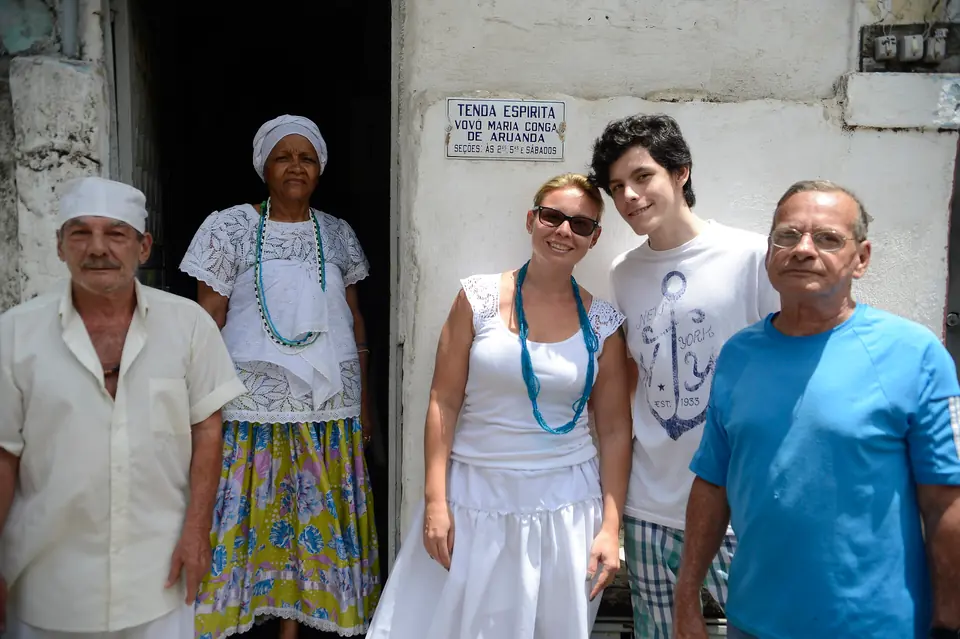
Five community members stand together at the entrance of Tenda Espírita de Umbanda Vovó Maria Conga de Aruanda; two wear white attire and ritual beaded necklaces (guias).
At the entrance of Tenda Espírita Vovó Maria Conga de Aruanda in Estácio (RJ), the first house registered in Rio de Janeiro's official Umbanda temple registry. Photo: Tânia Rêgo/Agência Brasil · CC BY 2.0
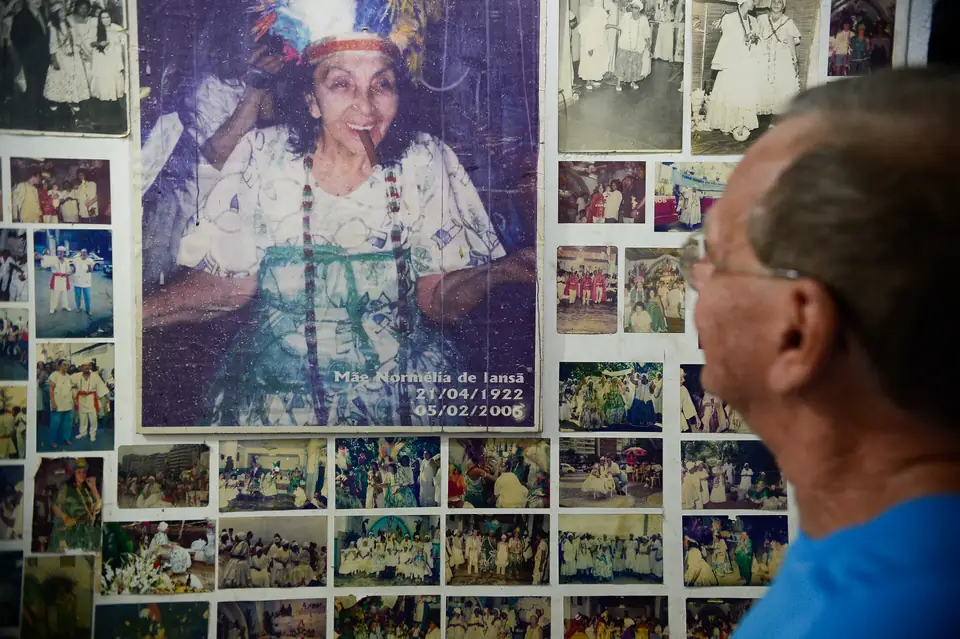
A man in a blue shirt stands in front of a large wall covered in framed photographs of temple members, with a woman's portrait centered.
Jorge Brito, director of the house, standing before a wall of community photographs. Photo: Tânia Rêgo/Agência Brasil · CC BY 2.0
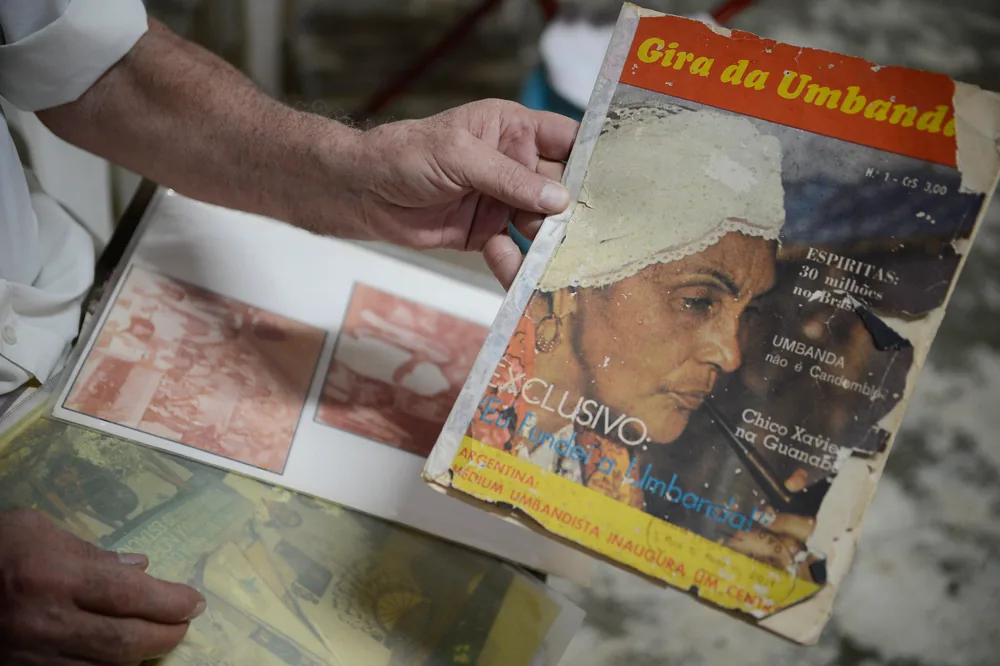
Hands holding a vintage printed issue of Gira da Umbanda magazine, featuring a portrait of a woman wearing a turban on the cover.
An issue of Gira da Umbanda magazine, photographed at the same religious house. Photo: Tânia Rêgo/Agência Brasil · CC BY 2.0

What characterizes Umbanda practice?

Across many branches, mediumship, giras (communal ritual gatherings), pontos cantados (ritual songs or chants), pontos riscados (ritual symbols or designs drawn during ceremonies), the ritual use of herbs, and spiritual guidance from spiritual entities occupy a central place.

Caboclos, Pretos-Velhos, Erês, Baianos, Boiadeiros, Marinheiros, Exus, and Pombagiras are examples of spiritual lines present in various Umbanda traditions. Their theological meanings, ritual roles, and modes of practice differ from house to house: no single description captures every community.

Food for thought · a living language

Picture a language spoken across distant regions: speakers share a common root, yet develop distinct vocabularies, idioms, and ways of passing down knowledge. Knowing a real community requires more than a generic dictionary; it means knowing its people, its history, and how that language is actually lived in each home.

“What changes when we begin understanding a religion by listening to its own practitioners instead of viewing it solely through external stereotypes?”

Chapter III · Candomblé · Ancestry, memory, and continuity

The Traditions of Candomblé

Diaspora, nations, oral transmission, and sacred ground: a living tradition whose historic religious spaces have received official cultural heritage recognition.

The history of Candomblé is deeply interwoven with the African presence in Brazil, the forced displacement and enslavement of diverse African peoples over several centuries, and the resilience, preservation, and communal reorganization of their religious traditions on Brazilian soil.

Its emergence should never be reduced to a simple, uniform process attributed to a single date or event. Distinct communities preserved and nurtured their own lineages, rooted in different peoples, language families, cosmologies, and liturgies.

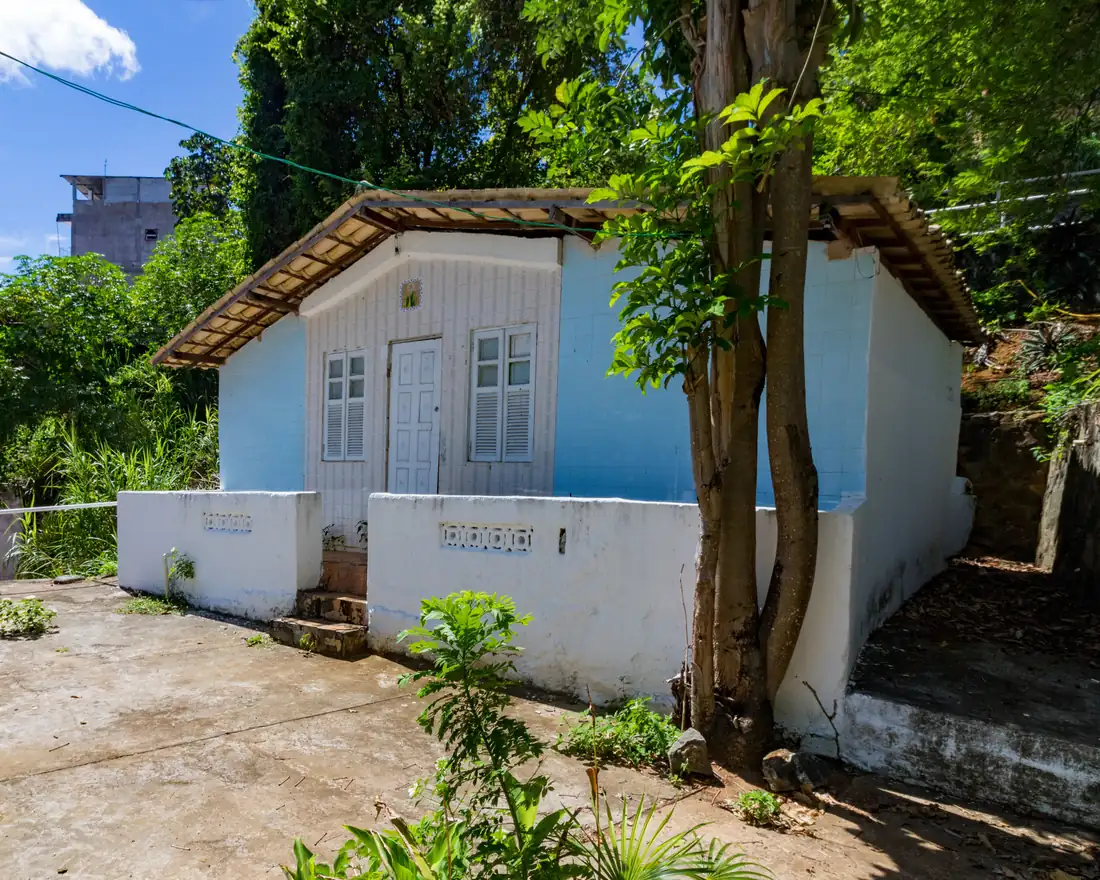
Single-story blue-and-white building with a ceramic tile roof surrounded by trees at Terreiro da Casa Branca do Engenho Velho in Salvador.
Terreiro da Casa Branca do Engenho Velho (Ilê Axé Iyá Nassô Oká), Salvador (Bahia). Photo: Paul R. Burley · CC BY-SA 4.0

Cultural and linguistic precision

Orixás, Voduns, and Inquices are not synonyms

Candomblé encompasses distinct traditions historically known as nations. The foundations of one nation should never be treated as automatically applying to all others.

  1. Yoruba traditions

    Ketu / Nagô Nation

    Rooted in the traditions of Yoruba-speaking peoples from modern-day Nigeria and Benin, the Ketu/Nagô nation centers on reverence for the Orixás, preserved through Yoruba-based ritual language, chants, mythology, and liturgy.

  2. Fon / Ewe traditions

    Jeje Nation

    Connected to Gbe-speaking peoples such as the Fon and Mahi of the former Kingdom of Dahomey (modern Benin), the Jeje nation centers on reverence for the Voduns, maintained through distinct ritual structures, drum rhythms, and sacred precepts.

  3. Bantu traditions

    Angola / Congo Nation

    Linked to Bantu-speaking peoples, including Kimbundu and Kikongo speakers from Angola and the Congo basin, the Angola/Congo nation centers on reverence for the Inquices (Nkisi), leaving a profound imprint on Brazilian culture and language.

In Candomblé's own understanding, reverence for the Orixás, Voduns, and Inquices is not mediumistic communication with the spirits of deceased individuals, as understood in Kardecist Spiritist practice. It is a sacred, initiatory, and communal relationship with deities, forces of nature, and ancestral principles.

Fundamental distinction
Small white structure with a ceramic roof and blue wooden door nestled among trees at Terreiro da Casa Branca do Engenho Velho in Salvador.
Building within Terreiro da Casa Branca. We selected photographs of the architecture and grounds, without exposing restricted ritual spaces or sacred objects. Photo: Paul R. Burley · CC BY-SA 4.0

Heritage, territory, and memory

Terreiro da Casa Branca do Engenho Velho (Salvador, BA)

Recognition of Terreiro da Casa Branca (Ilê Axé Iyá Nassô Oká) by IPHAN in 1984 marks a watershed moment in safeguarding Brazilian cultural heritage. This recognition goes beyond the preservation of a building: it acknowledges the site's historical, religious, architectural, and cultural significance within Afro-Brazilian life.

Ilê Axé Icimimó Aganjú Didê and other protected terreiros

IPHAN's heritage listing of additional terreiros, such as Ilê Axé Icimimó Aganjú Didê in Cachoeira (Recôncavo Baiano), illustrates the rich diversity of Afro-Brazilian traditions and the inseparable bond among religion, land, oral memory, sacred music, botanical knowledge, and communal life.

Food for thought · the tree and its roots

Imagine an ancient tree whose roots stretch across generations: the trunk and canopy we see today did not emerge in isolation—they depend on deep roots and growth that began long before we arrived. Ancestry, in many Afro-Brazilian traditions, expresses this living bond connecting generations, collective memory, community identity, and the oral and ritual transmission of wisdom.

“What does a society lose when it fails to recognize and protect the knowledge, memory, and traditions of its communities?”

Comparative synthesis

What They Share—and What Sets Them Apart

Understanding requires recognizing differences without ranking beliefs. Each column describes broad tendencies: communities within the same tradition may hold distinct interpretations.

Comparison among Kardecist Spiritism, Umbanda, and Candomblé across five dimensions: historical context, foundations, organization and transmission, practices and internal diversity, and recommended primary sources.
Comparison axis Kardecist Spiritism Paris, 1857 Umbanda Brazil, multiple origins Candomblé Ancestry and nations
Historical context France, mid-19th century. On April 18, 1857, Hippolyte Léon Denizard Rivail—under the pen name Allan Kardec—published The Spirits' Book in Paris, launching the Spiritist Codification.Brazil, 19th–20th centuries, emerging from African, Indigenous, Catholic, and other spiritual influences in diverse ways. Many houses celebrate 1908; scholarship points to a broader, decentralized formation.Colonial and Imperial Brazil, emerging from the forced displacement of diverse African peoples and the communal preservation and reorganization of their traditions.
Foundations and religious concepts God as supreme intelligence and first cause; immortality of the spirit; reincarnation and moral progress; spirit communication via mediumship. No worship of Orixás or other deities.In many Umbanda traditions, spiritual work is organized around lines of entities—such as Caboclos, Pretos-Velhos, Erês, Baianos, Exus, and Pombagiras—with reverence toward Orixás. Meanings and liturgies vary by terreiro.Initiatory, communal relationship with deities and forces of nature and ancestry: Orixás (Ketu/Nagô), Voduns (Jeje), or Inquices (Angola/Congo). This reverence is distinct from Kardecist mediumistic communication with deceased humans.
Organization and transmission Written codification in Kardec's five core works and structured study in autonomous centers linked through state federations and the Brazilian Spiritist Federation (FEB).Lived tradition transmitted primarily through terreiro practice, with varied literature across branches. Each house generally maintains a high degree of autonomy; federations exist, yet none speaks for all branches.Oral transmission, initiation, seniority, and communal life. Each terreiro (Ilê, roça, or inzo) typically governs itself and is structured by its lineage, spiritual family, and nation.
Practices and internal diversity Study meetings, fraternal assistance, and mediumistic practice, generally without ritual vestments or altars. Autonomous centers vary in emphasis and activities.Giras, pontos cantados and pontos riscados, herbal cleansing, incense, and fraternal assistance. Specific lines, chants, and practices vary across houses; no single template fits all.Initiatory and communal rites, chants in African ritual languages, sacred drumming, and sacred leaves (ewé). Precepts of one nation do not automatically carry over to another.
Recommended primary sources

Seek & You Shall Find · Podcast

Listen to the full episode

A conversation about the history, beliefs, and key differences among these three traditions, along with some common misconceptions—paired with our curated English reading list right below.

Episode #01 · Inaugural English episode of the Seek & You Shall Find Podcast, introducing the Spiritism Portal Series.

Ep. #01 — What Really Sets Kardecist Spiritism, Umbanda, and Candomblé Apart?

Inaugural Episode #01 in English of the Seek & You Shall Find Podcast—covering history, core concepts, English reading curation, and source matrix.

Episode chapters

Download full audio
Transcript & references Editorial script in American English (en-US) · overview of the episode's core themes
Host 1

Imagine chatting with three people. The first brings up Allan Kardec, reincarnation, and moral growth. The second shares experiences from an Umbanda terreiro. The third talks about the Orixás, Voduns, or Inquices and ancestral lineage in Candomblé. You might recognize a few overlapping terms, so it's natural to wonder: are they talking about the same religion?

Host 2

People ask that all the time. Without historical context, it's easy to lump completely distinct traditions together. It's a bit like hearing three different musical genres grouped under the same playlist label—they all explore similar human themes, yet their rhythms, instruments, and histories come from entirely different worlds.

Host 1

Exactly—a shared label doesn't tell the real story. In France in 1857, educator Hippolyte Léon Denizard Rivail, writing as Allan Kardec, published The Spirits' Book. That launched Kardecist Spiritism as a written doctrine centered on the immortality of the soul, mediumship, and moral progress across lifetimes.

Host 2

With Umbanda, we encounter a distinctly Brazilian religion shaped at the crossroads of African, Indigenous, Catholic, and other spiritual traditions. While many communities honor the traditional founding narrative associated with Zélio Fernandino de Moraes in 1908, historians also show that Umbanda grew out of diverse regional practices, where each terreiro maintains its own traditions and relationships with Caboclos, Pretos-Velhos, and other spiritual entities.

Host 1

And the third path leads to Candomblé—an umbrella of Afro-Brazilian traditions forged through the resilience of displaced African peoples. Through oral memory, initiation, and community life, distinct nations like Ketu, Jeje, and Angola preserve reverence for the Orixás, Voduns, or Inquices. Candomblé is grounded in its own ancestral worldviews and religious traditions, not as an offshoot of Spiritism—and Brazil's heritage agency, IPHAN, has protected important Afro-Brazilian religious sites, including Terreiro da Casa Branca in Salvador.

Host 2

Today on the Seek & You Shall Find Podcast, we're opening each of these three doors using sources from within each tradition, public heritage records, and academic research—because there's a big difference between genuinely understanding a tradition and merely having heard about it.

Closing · Reading & Support

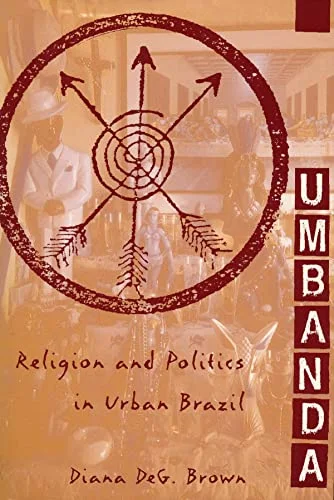
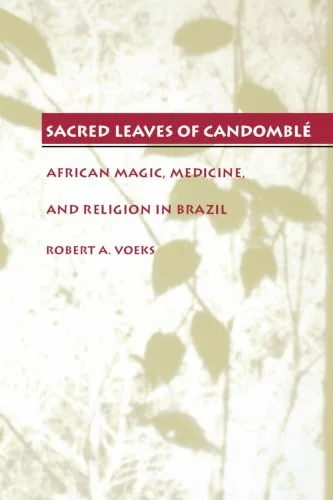
If you'd like to explore Kardecist Spiritism, Umbanda, and Candomblé further, we've put together a verified English reading list featuring The Spirits' Book by Allan Kardec, Umbanda: Religion and Politics in Urban Brazil by Diana DeG. Brown, and Sacred Leaves of Candomblé by Robert A. Voeks. If you're listening on a podcast app, check the official links in the episode description. And if you're already on our website, just scroll right below this player to browse our recommended editions and the full source matrix behind this episode.

Browse right below for our curated English reading list and the source-verification matrix behind this study.

Editorial Curation · English Editions

Further Reading on the Three Traditions

To explore Kardecist codification, Umbanda's historical roots, and Afro-Brazilian traditions through English-language books, we curated this reading list. As an Amazon Associate, Seek & You Shall Find earns from qualifying purchases through the official links below at no extra cost to you, supporting our independent research.

Kardecist Spiritism · English Edition

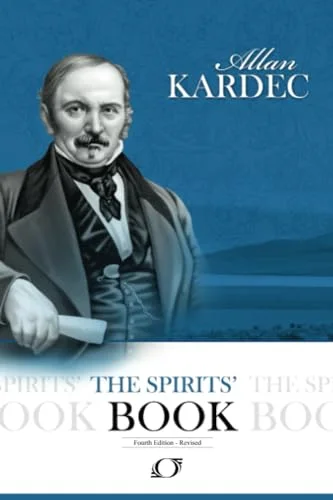
The Spirits' Book — Allan Kardec

Official English edition cover of The Spirits' Book by Allan Kardec (Fourth Edition - Revised, International Spiritist Council / EDICEI)

The foundational text of the Spiritist Codification (1857) in English translation (EDICEI, ISBN 978-8598161181), presenting core principles on the nature of spirits, reincarnation, and moral law.

Paperback & Kindle Editions Check Availability
View on Amazon →
Umbanda · Columbia University Press

Umbanda: Religion and Politics in Urban Brazil — Diana DeG. Brown

Book cover of Umbanda: Religion and Politics in Urban Brazil by Diana DeG. Brown (Columbia University Press)

Landmark anthropological study in English (Columbia University Press, ISBN 978-0231100052) examining Umbanda's historical emergence, urban networks, and diverse traditions across Brazil.

Paperback Edition Check Availability
View on Amazon →
Candomblé · University of Texas Press

Sacred Leaves of Candomblé — Robert A. Voeks

Book cover of Sacred Leaves of Candomblé: African Magic, Medicine, and Religion in Brazil by Robert A. Voeks (University of Texas Press)

Rigorous ethnobotanical and religious study (University of Texas Press, ISBN 978-0292787315) exploring Yoruba-Brazilian cosmology, sacred leaves (ewé), and Afro-Brazilian healing lineages in Bahia.

Paperback & Hardcover Check Availability
View on Amazon →
Source-Verification Matrix Five records · each claim classified by historical, doctrinal, heritage, or academic standing
  1. Record 1 · Historical and bibliographic Standing: Documented historical fact

    Publication of The Spirits' Book by Allan Kardec in Paris on April 18, 1857, as the foundational milestone of the Spiritist Codification.

    Primary or traditional source
    The Spirits' Book (Allan Kardec, 1857)
    Institutional or public source
    Brazilian Spiritist Federation (FEB)
    Academic context
    Historiography of 19th-century French spiritualism
    Official PDF (FEB) (opens in new tab)
  2. Record 2 · Doctrinal and religious Standing: Core tenet of Spiritist doctrine

    Principles of the soul's immortality, reincarnation, spirit communication, and ongoing moral progress.

    Primary or traditional source
    Core works of the Spiritist Codification (1857–1868)
    Institutional or public source
    Spiritist Source Guide (FEB)
    Academic context
    Religious studies (presented as tenets of faith and doctrine, not as empirical findings or scientific consensus)
    Source Guide (FEB) (opens in new tab)
  3. Record 3 · Historical and anthropological Standing: Interpretations vary; historical debate continues

    Founding narrative linked to Zélio Fernandino de Moraes and the Caboclo das Sete Encruzilhadas (1908) contrasted with broader historical processes in Umbanda's formation.

    Primary or traditional source
    Oral tradition and records of Tenda Espírita Nossa Senhora da Piedade
    Institutional or public source
    National Council of Umbanda (CNU) and Federation of Umbanda of Brazil (FUB)
    Academic context
    Academic research on Afro-Brazilian and Indigenous religious formations (EduCapes / CAPES)
    Master's Thesis (EduCapes) (opens in new tab)
  4. Record 4 · Cultural, linguistic, and liturgical Standing: Established across tradition and scholarship

    Diversity of Candomblé nations (Ketu, Jeje, Angola) and conceptual distinction among Orixás, Voduns, and Inquices.

    Primary or traditional source
    Traditional terreiro communities and religious leaders
    Institutional or public source
    IPHAN and Palmares Cultural Foundation
    Academic context
    Afro-Brazilian anthropology and history
    Palmares Cultural Foundation (opens in new tab)
  5. Record 5 · Historical and heritage Standing: Verified in public heritage archives

    Heritage designation of Terreiro da Casa Branca do Engenho Velho (Salvador, BA) by IPHAN in 1984 as a landmark of Brazilian cultural heritage.

    Primary or traditional source
    Archival records of Ilê Axé Iyá Nassô Oká
    Institutional or public source
    National Institute of Historic and Artistic Heritage (IPHAN)
    Academic context
    Studies on intangible heritage and Afro-Brazilian sacred territories
    Official Registry (IPHAN) (opens in new tab)

“Curiosity is the beginning. Study is the path. And the ability to recognize complexity is part of learning.”

These traditions do not share the same foundations, and we need not pretend they do. We can study them respectfully, examine their histories, and honor the significance of their communities.

Keep exploring

Where to go next

Image credits

All photographs on this page have documented provenance and licenses permitting editorial use. They were cropped, resized, and converted to WebP; the black-and-white version of Terreiro da Casa Branca is an adaptation shared under the same license (CC BY-SA 4.0).